
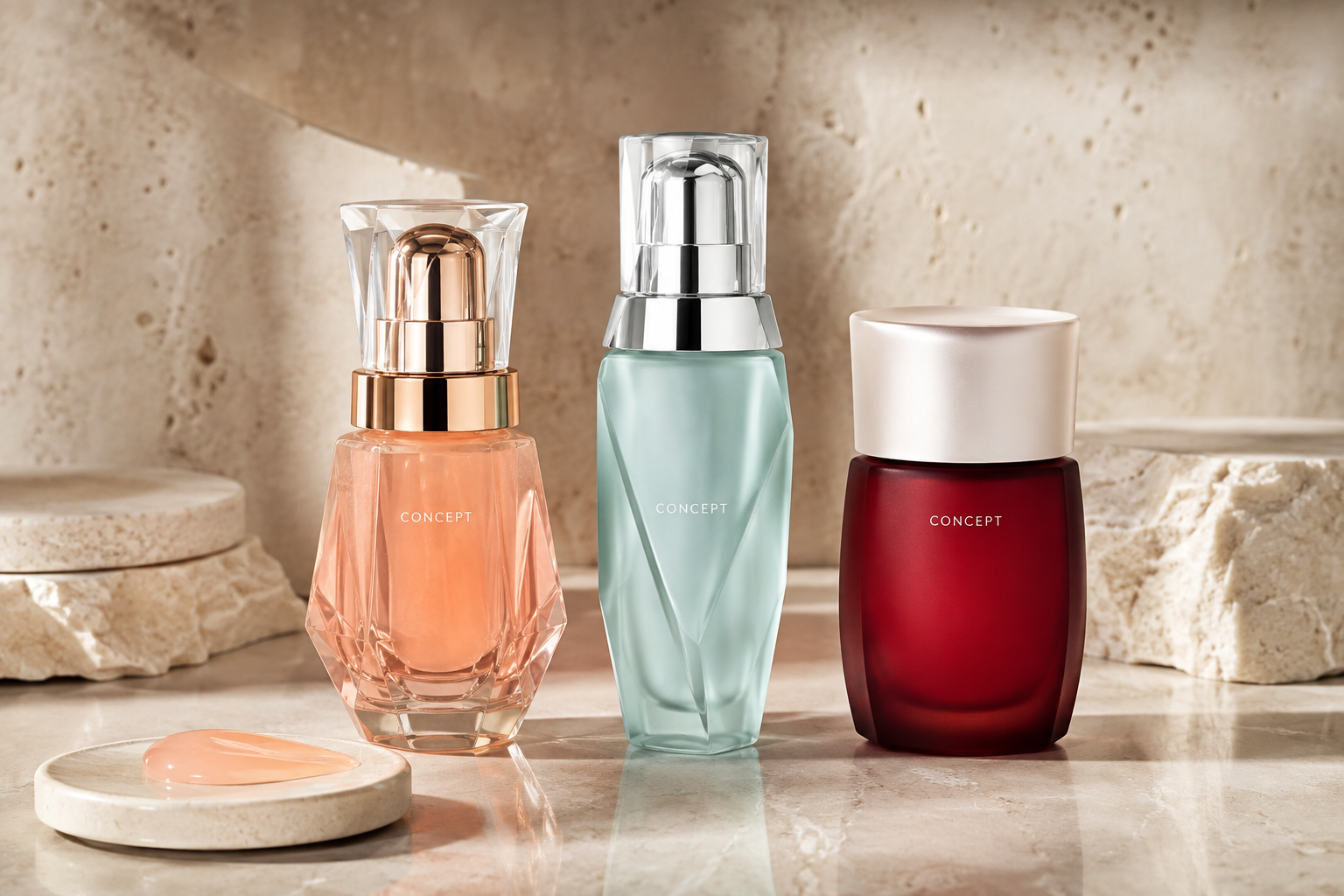
Editorial illustration: AI-generated imagery; any people or packaging shown are illustrative, not the reviewed product or evidence of results.
Format comparison
Quick answer
Choose a PDRN serum when you want a lighter layer that can sit under an existing moisturizer. Choose a cream when you want the product to provide more of the moisturizing finish itself. Neither format proves that more PDRN reaches its target or produces a better result. The complete formula, the actual ingredient identity, the amount used, packaging, stability, and the evidence for that finished product matter more than the word serum or cream.
If two products make similar claims but neither provides finished-product evidence, compare them as moisturizers with different textures and label disclosures, not as established regenerative treatments.
Key takeaways
- Serum and cream describe product form, not a standardized strength.
- A front-label PDRN number may refer to a complex or source material rather than directly comparable Sodium DNA content.
- Serums usually add a light treatment layer; creams more often replace or supplement moisturizer.
- Vehicle and skin condition affect delivery, so injectable findings cannot be transferred to either format.
- Buy for formula transparency, routine fit, and seller reliability before dramatic claims.
What the format can tell you
A serum is commonly a low-viscosity liquid or gel designed to spread in a thin layer. It may contain humectants, solvents, polymers, oils, emulsifiers, or silicones despite its light appearance. A cream is an emulsion with a larger moisturizing role and often more emollient or occlusive materials. These are market conventions, not regulatory definitions of potency.
For oily-feeling or humid-weather routines, a serum can add less weight. For dry conditions, a cream can reduce the need for another layer. A rich serum may still feel heavier than a gel cream, so compare the ingredient list, directions, and texture information rather than relying on the category name.
What the format cannot tell you
Format alone does not identify molecular size, purity, source, stability, or effective delivery. It also does not show whether a brand’s PDRN wording corresponds to Sodium DNA, Hydrolyzed DNA, a plant-derived complex, an extract, or another proprietary material. If the ingredient identity is unclear, record that uncertainty rather than converting a marketing percentage into a scientific dose.
Research involving injections, wound care, post-procedure skin, or another tested route cannot establish routine intact-skin performance for a retail serum or cream. Even a human topical study applies most directly to its tested preparation. It should not be used to certify every product carrying the same fashionable term.
Compare the whole formula
Begin with the complete ingredient list. Note where the declared DNA-related ingredient appears, but do not treat list position as an exact percentage unless the brand provides a clear, verifiable disclosure. Then check the moisturizing system. Glycerin, glycols, hyaluronic acid, panthenol, ceramides, squalane, oils, silicones, and fatty materials can shape how the product feels and how well it supports an existing routine.
Look for fragrance or fragrant plant materials if you prefer to avoid them. Check alcohols by exact name rather than treating every ingredient containing the word alcohol as drying. Review directions and cautions, packaging, size, period-after-opening information, and whether the seller shows a current ingredient list. Formula changes are possible, so keep a checked date in any comparison.
When a serum fits better
A serum is the more flexible choice when you already own a reliable moisturizer, want to test one new variable, or prefer to adjust richness with a separate cream. It can also make side-by-side routine tracking simpler: cleanser, serum on selected days, moisturizer, and daytime sunscreen. If it pills under other products, reduce the amount, allow more drying time, or reconsider the combination rather than assuming pilling proves poor absorption.
When a cream fits better
A cream can make sense when adding another layer would be inconvenient or when your routine needs more emollience. Judge it first as a moisturizer: does it leave the skin comfortable, does it interfere with sunscreen or makeup, and is the finish appropriate for climate and personal preference? The presence of PDRN language does not compensate for a base formula that you dislike or cannot use consistently.
A five-field buying check
- Identity: What exact DNA-related ingredient or complex is disclosed?
- Context: Is the headline number explained in relation to the finished formula?
- Formula: Does the complete moisturizer and fragrance profile fit your routine?
- Evidence: Is there finished-product topical evidence, or only ingredient and procedure research?
- Seller: Is the ingredient list current, the retailer identifiable, and the return policy usable?
If one of these fields is missing, mark it unknown. Do not award an assumed advantage merely because a package uses clinical graphics, a large ppm number, or medical-sounding language.
Evidence limits
Published PDRN and PN literature spans different materials, molecular characteristics, routes, outcomes, and clinical contexts. A small topical study of one preparation can justify further attention but not a class-wide verdict. Texture preferences and moisturizer performance are also individual. This comparison therefore ranks decision fields, not biological superiority.
Medical boundary
Cosmetic serums and creams are not substitutes for treatment of wounds, inflammatory disease, infection, or post-procedure complications. Do not apply a product to broken or recently treated skin unless a qualified professional responsible for that care has advised it. Stop use and seek appropriate help for a significant reaction.